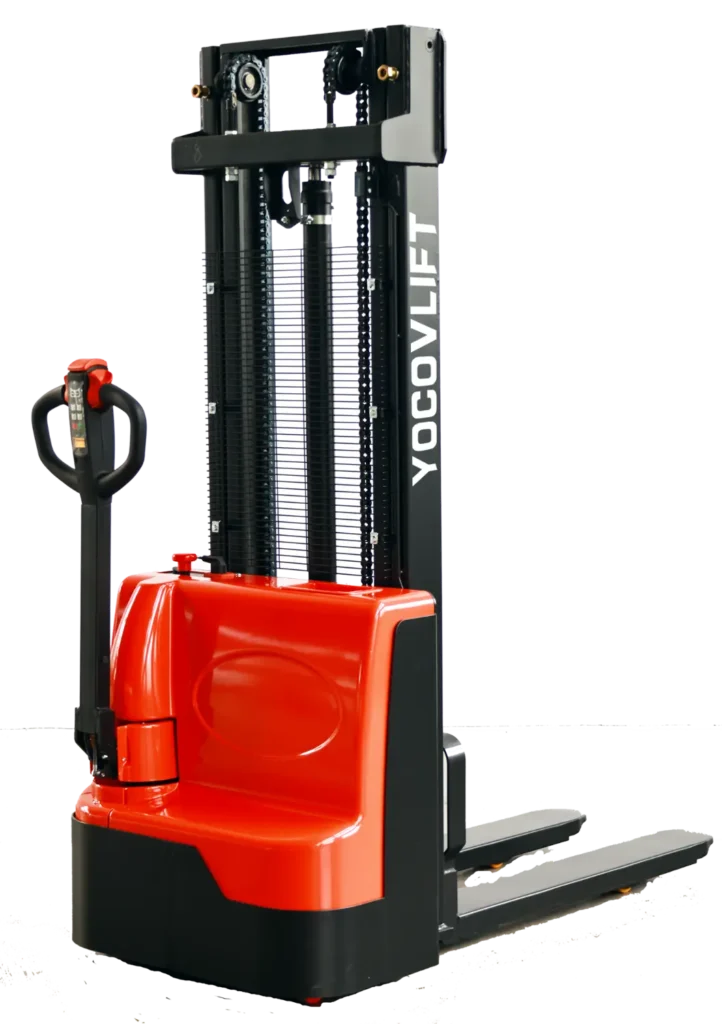
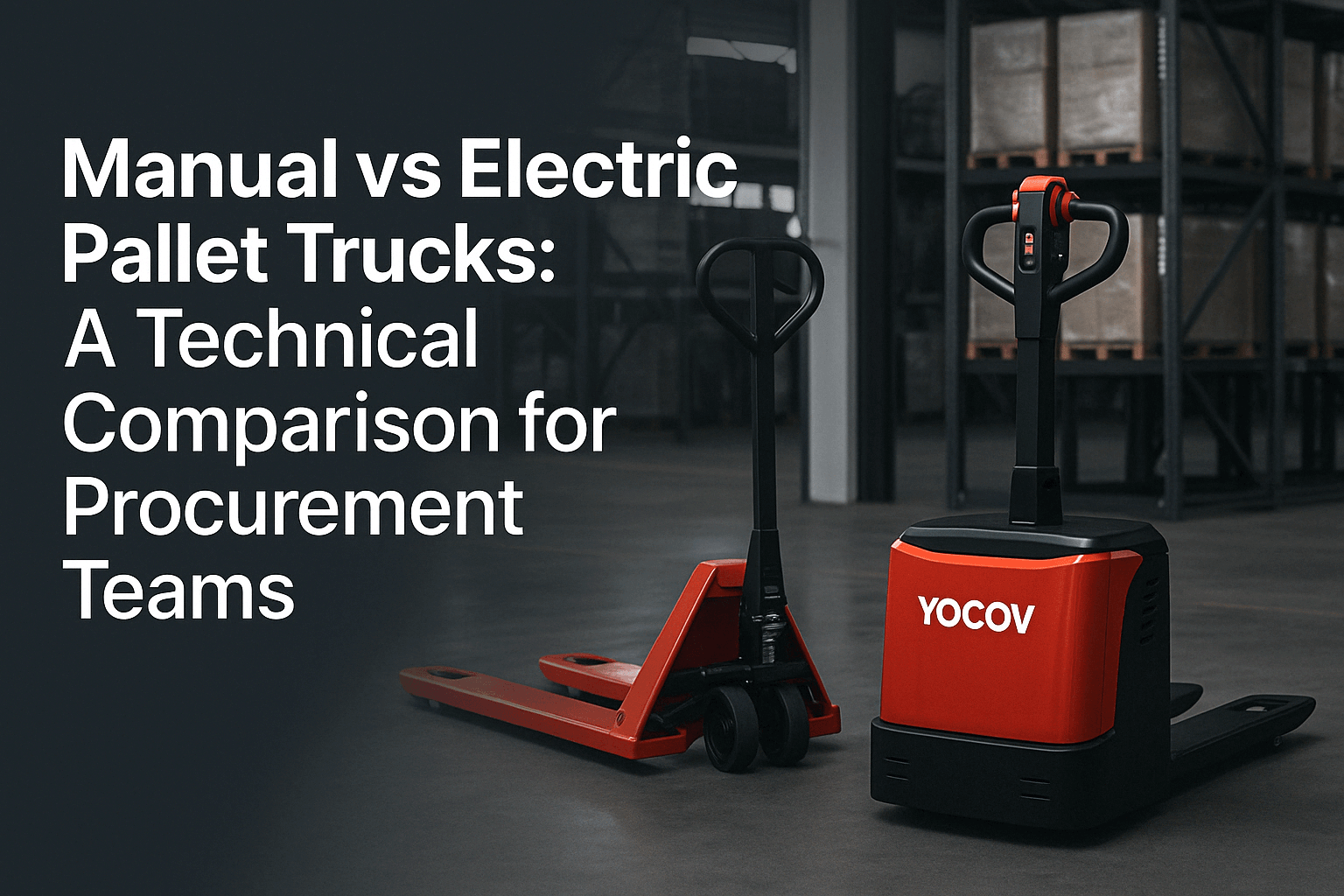
As material handling needs grow more complex, choosing the right pallet truck isn’t just a matter of budget—it’s a question of operational strategy, long-term ROI, and safety compliance. This guide provides a deep-dive comparison between manual pallet trucks and electric pallet trucks, written specifically for procurement teams, warehouse engineers, and facility managers.
🛠️ Core Functional Differences
| Parameter | Manual Pallet Truck | Electric Pallet Truck |
|---|---|---|
| Drive & Lift Mechanism | Hydraulic pump & manual push/pull | Electric motor (walkie/rider type) |
| Power Source | None | Lead-acid or lithium-ion battery |
| Control Interface | Handle with pump lever | Control head with throttle & lift/lower buttons |
| Standard Fork Length | 1150–1220 mm | 1150–2400 mm (optionally extendable) |
| Load Capacity Range | 2.0–3.0 tons | 1.2–3.5 tons (4.5T in rider models) |
| Turning Radius | Very tight | Wider, power-assisted |
⚡ Efficiency in High-Frequency Operations
A typical operator using a manual jack moves about 30 pallets per hour. With an electric walkie, that number can rise to 60–70 pallets/hour.
Let’s assume:
-
$15/hour wage
-
200 pallet moves/day
Annual Labor Cost with Manual:
7 hours/day × $15/hr × 260 days = $27,300/year
Annual Labor Cost with Electric:
4.7 hours/day × $15/hr × 260 days = $18,330/year
✅ Annual savings per operator: ~$8,970
⚙️ Payback period for most electric models: ~5–8 months
🔋 Battery Technology Comparison
Modern electric pallet jacks are powered by:
-
Lead-acid batteries – Low upfront cost, but need daily maintenance and long charging times (6–8 hours)
-
Lithium-ion batteries – Higher efficiency, 3–4x longer life cycle, 2–3 hour charging time, no maintenance, and opportunity charging
YOCOV’s EPJ20Li series includes advanced battery management systems (BMS), smart charging, and modular pack designs for multi-shift operations.
🧱 Terrain & Floor Type Suitability
| Floor Type | Manual Pallet Truck | Electric Pallet Truck |
|---|---|---|
| Smooth indoor concrete | ✅ Excellent | ✅ Excellent |
| Slight ramps | ⚠️ Manual effort | ✅ Power-assisted anti-roll-back |
| Cold storage (sub-zero) | ✅ Usable | ✅ With IP54 enclosure |
| Outdoor rough terrain | ❌ Not suitable | ✅ With industrial drive wheels |
Electric pallet trucks can handle more demanding applications with larger drive wheels, shock absorption, and controller sealing.
🔐 Safety Feature Comparison
| Feature | Manual Jack | Electric Pallet Truck (e.g. YOCOV EPJ Series) |
|---|---|---|
| Emergency reverse button | ❌ Not available | ✅ Standard |
| Auto speed reduction on curves | ❌ No | ✅ Yes |
| Regenerative braking | ❌ No | ✅ Available |
| Load indicator or scale | ❌ Not available | ✅ Optional on select models |
Electric trucks significantly reduce wrist and back injuries (up to 40%) compared to manual handling, especially for frequent users.
📜 Compliance & International Standards
Electric models must comply with:
-
EN ISO 3691-1 (European safety for industrial trucks)
-
ANSI B56.1 (USA)
-
CE / UL / ETL depending on destination country
YOCOV offers OEM-ready solutions with global certification options, chargers, and multilingual manuals.
🏁 Recommendation by Use Case
| Application Scenario | Recommended Option |
|---|---|
| Small stockroom, light usage | Manual Pallet Truck |
| High-volume movement > 50/day | Electric Pallet Truck |
| Cold storage with long aisles | Electric (IP-rated) |
| Dual-shift logistic center | Lithium-powered electric |
🔍 YOCOV Expert Series
YOCOV offers purpose-built models for every need:
-
AC30: Compact, entry-level manual pallet jack
-
QET20P: Fast-charging lithium-ion, 8–10 hours runtime, BMS monitoring
📩 Not Sure What You Need?
Contact Our Sales Engineers for detailed technical advice